We are pleased to announce that between the ACORN 2015 allocation, and additional support provided through the Faculty of Health, that offers to support the recruitment of six PhD students has been made. Fifteen proposals were submitted, seeking £339K in ACORN funding. Importantly, these proposals were leveraged against almost £550K of additional support. In total, ISTM and the Faculty of Health have committed almost £120K to the ACORN 2015 process, recognising the high quality of the applications made.
The successful students will join the research teams led by Tony Curtis, Martin Fisher, Nick Forsyth, Monte Gates, Jan Kuiper and Pensee Wu.

Friday, 24 July 2015

Monday, 13 July 2015
Novel approach identifies unique DNA signature
In exciting new work published in the prestigious journal Epigenomics, researchers at ISTM and at the Haywood Rheumatology Centre, have for the first time identified disease-associated changes to the DNA epigenome in joint fluid cells from patients with rheumatoid arthritis.
These patients often develop swollen joints and the excess fluid represents an attractive source to harvest and study the cells that cause damage within the diseased joint without damaging the joint tissue itself. The Epigenetics Research group used these cells to perform genome-wide profiling across more than 20,000 individual genes in these patients.
Dr John Glossop, first author of the publication, and colleagues identified a signature in these cells that uniquely distinguished patients with rheumatoid arthritis from those with other types of arthritis. Previous studies, where similar genes have been identified, have relied on cells from joint tissue obtained during joint replacement surgery.
These important new data support the use of joint fluid as a readily available alternative to study the role of these changes in the onset of joint disease and in the clinical management of this condition.
The study was funded by the Haywood Rheumatism Research and Development Foundation, and was authored by John Glossop, Kim Haworth, Nicola Nixon, Jon Packham, Peter Dawes, Anthony Fryer, Derek Mattey and William Farrell (ISTM/Haywood Rheumatology Centre), together with Richard Emes, Professor of Bioinformatics at the University of Nottingham.
These patients often develop swollen joints and the excess fluid represents an attractive source to harvest and study the cells that cause damage within the diseased joint without damaging the joint tissue itself. The Epigenetics Research group used these cells to perform genome-wide profiling across more than 20,000 individual genes in these patients.
These important new data support the use of joint fluid as a readily available alternative to study the role of these changes in the onset of joint disease and in the clinical management of this condition.
The study was funded by the Haywood Rheumatism Research and Development Foundation, and was authored by John Glossop, Kim Haworth, Nicola Nixon, Jon Packham, Peter Dawes, Anthony Fryer, Derek Mattey and William Farrell (ISTM/Haywood Rheumatology Centre), together with Richard Emes, Professor of Bioinformatics at the University of Nottingham.
 |
| Dr John Glossop |
Thursday, 9 July 2015
2015 ISTM Away Day
Over fifty members of ISTM gathered for their annual Away Day yesterday, held at Trentham Monkey Forest.
Speakers included two newly-appointed Professors: Professor of Medicine, Alan Silman, who set out the insights and challenges of his work on co-morbidity, and ISTM's new Professor in Cardiology, Mamas Mamas, who described his work to change surgical practice in the use of stents.
Mr Mark Hackett, Chief Executive of the University Hospital of North Midlands (UHNM), also addressed the meeting and shared UHNM's vision for future NHS research in partnership with Keele, and discussed steps that will be undertaken over the next decade to advance this agenda.
Members also discussed ISTM's own strategy and structure, and learned about the implications of Open Access publishing from Ellie James and Scott McGowna from the Directorate of Engagement and Partnerships at Keele University.
And, if all that wasn't enough, attendees were then able to walk around the park and meet some of the resident Barbary Macaques monkeys.
Speakers included two newly-appointed Professors: Professor of Medicine, Alan Silman, who set out the insights and challenges of his work on co-morbidity, and ISTM's new Professor in Cardiology, Mamas Mamas, who described his work to change surgical practice in the use of stents.
Mr Mark Hackett, Chief Executive of the University Hospital of North Midlands (UHNM), also addressed the meeting and shared UHNM's vision for future NHS research in partnership with Keele, and discussed steps that will be undertaken over the next decade to advance this agenda.
Members also discussed ISTM's own strategy and structure, and learned about the implications of Open Access publishing from Ellie James and Scott McGowna from the Directorate of Engagement and Partnerships at Keele University.
And, if all that wasn't enough, attendees were then able to walk around the park and meet some of the resident Barbary Macaques monkeys.
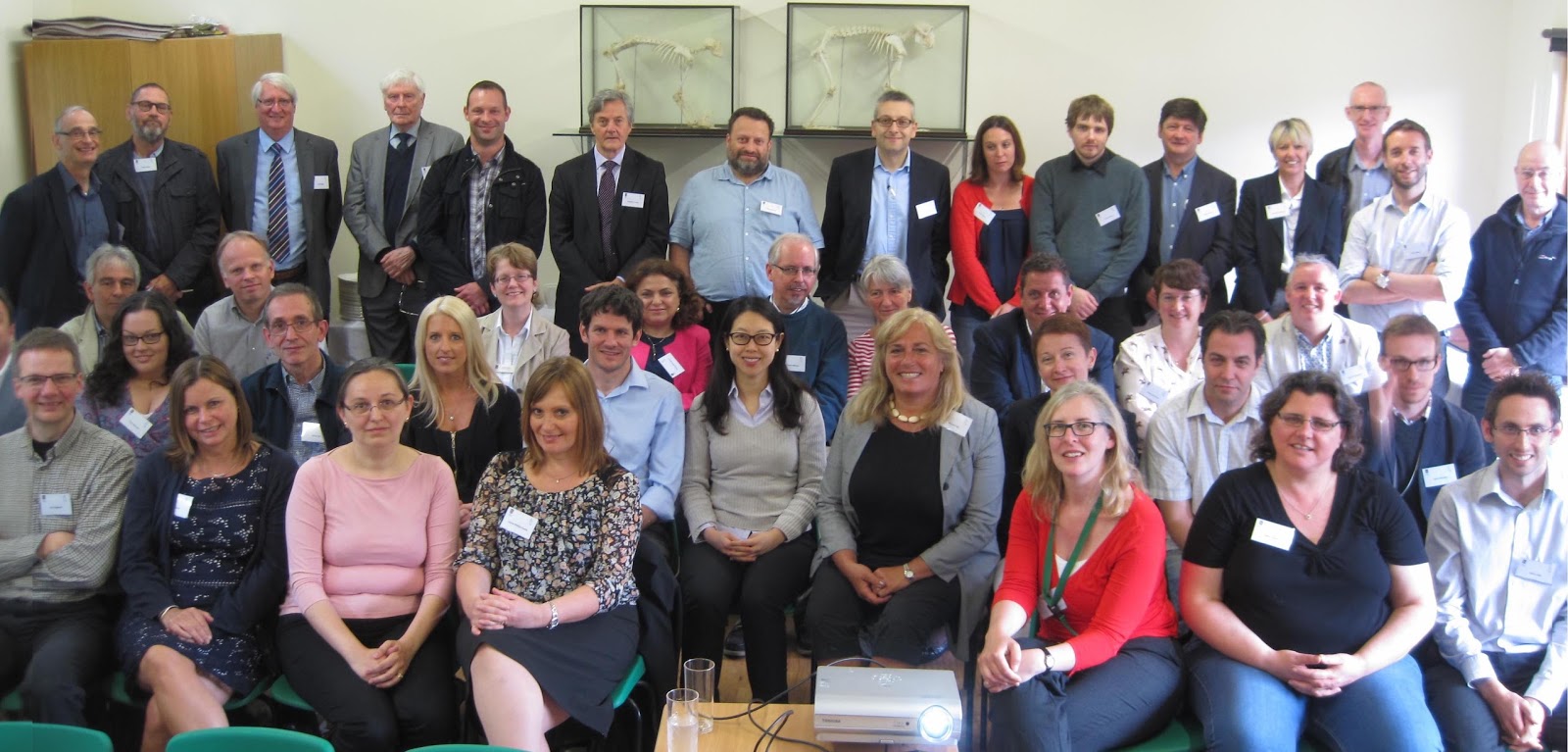 |
| The photograph shows members and guests assembled during the ISTM Away Day, which closed with a guided visit to the Monkey Forest. |
Tuesday, 23 June 2015
ISTM Women in Engineering: Professor Alicia El Haj
Happy National Women in Engineering Day!
For the first post in our interview series with the female engineers in ISTM, we talked to Professor Alicia El Haj, a pioneer in regenerative medicine and our Institute Director. In recognition of her leading role in bioengineering, she received the MRC Suffrage Science Award 2015, which aims to encourage more women to pursue leadership roles in science and engineering.

You work in Cell Engineering. What does that mean?
Cell engineering involves finding new ways to use cells in treatments for human disease and injury. Essentially, we design exciting technologies for controlling the way cells behave. As a bioengineer, I take principles from engineering, such as biomechanics, and apply them to stem cells, and also use magnetic and optical materials. We often set up models of human tissues to study the way we can organise and control stem cells. This means building ‘bioreactors’, which are chambers which allow the growth of human tissues outside the body.
I got into research in this field because I found the concept of a stem cell as a therapy fascinating! But trying to find ways of controlling cells to help people suffering from disease and injury is extremely challenging. We work in an NHS environment, and everyday we see how much need there is in healthcare for new therapies. If my research can make steps forward along the pathway towards practical application in the clinic, I will have felt an enormous sense of achievement ☺. My research can also be incredible fun, allowing me to work across an international environment.
What is an exciting project you are working on at the moment?
One of my most exciting projects at the moment is to see if we can use external magnetic fields to control the way cells behave in the body. We are designing a therapy where we attach small magnetic nanoparticles to signal systems on the cell and then inject them into a site such as the knee where we want them go and fix the cartilage. By using an external magnet, we can move the cells about and control the activation of the cell through the signal system. This means we can target cells and deliver injectable therapies which no longer need surgery! The Scientific American has an amazing article on our work in April which calls it the ‘Launch of the Nanobots!’
How did you become a Professor of Cell Engineering?
When I first went to University, I wanted to become a game warden in an African safari park! I had no idea that I would fall in love with bioengineering research, and couldn't have anticipated the enjoyment it has brought me.
The satisfaction of spending my days trying to answer new questions with a great group of young training students is fantastic. I spent my early career travelling to different universities in Europe and the USA before settling in the UK. I enjoy my job tremendously and the variation in work day to day suits me. It allows me to balance my job with my family and my home full of the safari park that I ended up with on my doorstep!
I was very proud to achieve a Royal Society Merit Award and gain my Professorship, which is also a reflection of the good people who have worked with me over the years.
How can we encourage more women to work in engineering?
How can we encourage more women to work in engineering?
I get involved with action groups who try and encourage young female students to join us in a career in engineering and science. I hope that I can show them that bioengineering is for everyone!
I like to show how engineering is not as dull as it is often portrayed, and how I have managed to balance my normal family life with my partner, our four children, and a home full of dogs and horses with a full-on career in research.
There is a place for everyone in engineering and I hope you will consider joining us!
Tuesday, 9 June 2015
ISTM Women in Engineering
In our research institute we have quite a few engineers. If you are thinking of men in oil-stained overalls carrying spanners, think again! Hand tools are optional, and overalls would be an unusual outfit choice. More to the point, many of our engineers are women.
Sadly, engineering is misunderstood. Engineers do not fix cars and install new boilers. They design self-driving cars and develop new ways to produce clean energy. Engineers are inventors, who try to find solutions to problems and improve our world.
In our institute, the focus is human health: our engineers work on many biomedical research areas, such as designing prosthetic limbs, using stem cells to treat degenerative diseases, and developing new cancer therapies.
Engineering is creative and fulfilling. I am a female biomedical engineer myself, and I love it! (I do not use spanners in my work. I mostly use imaginary objects, and sometimes a pointy stick.)
However, the UK has a shortage of engineers. According to EngineeringUK, we need to double the number of recruits into engineering to meet demand. Girls in particular seem to think that engineering is not for them. I was shocked to find out that only 6% of the engineering workforce in the UK is female!
We need to encourage young people and particularly girls to consider careers in engineering. Who better to inspire them than female engineers in our institute? During the next few months, I will ask them about their work and career paths, and post their responses here.
June 23rd is National Women in Engineering Day so a fitting day to start our interview series. In the meantime, here is some reading for you: Tomorrow’s Engineers is a great website with information and resources on engineering careers. Start here: What is engineering?
Sadly, engineering is misunderstood. Engineers do not fix cars and install new boilers. They design self-driving cars and develop new ways to produce clean energy. Engineers are inventors, who try to find solutions to problems and improve our world.
In our institute, the focus is human health: our engineers work on many biomedical research areas, such as designing prosthetic limbs, using stem cells to treat degenerative diseases, and developing new cancer therapies.
Engineering is creative and fulfilling. I am a female biomedical engineer myself, and I love it! (I do not use spanners in my work. I mostly use imaginary objects, and sometimes a pointy stick.)
However, the UK has a shortage of engineers. According to EngineeringUK, we need to double the number of recruits into engineering to meet demand. Girls in particular seem to think that engineering is not for them. I was shocked to find out that only 6% of the engineering workforce in the UK is female!
We need to encourage young people and particularly girls to consider careers in engineering. Who better to inspire them than female engineers in our institute? During the next few months, I will ask them about their work and career paths, and post their responses here.
June 23rd is National Women in Engineering Day so a fitting day to start our interview series. In the meantime, here is some reading for you: Tomorrow’s Engineers is a great website with information and resources on engineering careers. Start here: What is engineering?
Monday, 8 June 2015
Festschrift for Professor Warren Lenney
On Friday 6th June an academic meeting titled “All’s well that ends well!” was held at Keele Hall to celebrate the career of Prof Warren Lenney who is retiring in August. This “Festschrift” was attended by over one hundred family, friends and colleagues of Professor Lenney from across the UK. Ten speakers from South America, Europe and the UK gave talks covering a range of interesting topics in Paediatric and Adult Respiratory Medicine as documented below:
“Asthma and Allergy in Olympians” - Prof Kai-Håkon Carlsen, University of Oslo, Norway
“CF Nutrition: Chewing the fat” - Dr Gary Connett, University Hospital Southampton, UK
“Is Asthma Control Achievable? Can we affect it?” - Prof Søren Pedersen, Kolding Hospital, Denmark
“Poetry, Politics and Cystic Fibrosis” - Prof Kevin Webb, Manchester Adult CF Centre, UK
“Education, Education, Education!” - Dr Will Carroll, Derby Childrens Hospital, UK
“What Paediatricians Should Read” - Prof Andy Bush, Royal Brompton Hospital, UK
“Pleural Disease in Brazilian Children” - Prof Gilberto Bueno Fischer, The Federal University of Porto Allegro, Brazil
“From molecules in space to molecules in breath” - Prof David Smith (FRS), Keele University, UK
“Research is the future, the future is …..” - Dr Francis Gilchrist, Royal Stoke University Hospital, UK
“All’s well that ends well!” - Prof John Price, Kings College Hospital, UK
“Asthma and Allergy in Olympians” - Prof Kai-Håkon Carlsen, University of Oslo, Norway
“CF Nutrition: Chewing the fat” - Dr Gary Connett, University Hospital Southampton, UK
“Is Asthma Control Achievable? Can we affect it?” - Prof Søren Pedersen, Kolding Hospital, Denmark
“Poetry, Politics and Cystic Fibrosis” - Prof Kevin Webb, Manchester Adult CF Centre, UK
“Education, Education, Education!” - Dr Will Carroll, Derby Childrens Hospital, UK
“What Paediatricians Should Read” - Prof Andy Bush, Royal Brompton Hospital, UK
“Pleural Disease in Brazilian Children” - Prof Gilberto Bueno Fischer, The Federal University of Porto Allegro, Brazil
“From molecules in space to molecules in breath” - Prof David Smith (FRS), Keele University, UK
“Research is the future, the future is …..” - Dr Francis Gilchrist, Royal Stoke University Hospital, UK
“All’s well that ends well!” - Prof John Price, Kings College Hospital, UK
The meeting was a huge success and short papers from each of the speakers are going to be published in a special edition of Paediatric Respiratory Reviews later in the year.
Monday, 1 June 2015
Keele Community Day
Keele Community Day provided another opportunity this month for ISTM to engage with the public and to help raise the Institute's public profile in more valuable outreach work. The rain couldn't keep people away on Sunday, with a large turnout and a constant stream of people visiting the ISTM table in the Chancellor's Building. Children and adults alike were keen to speak to Paul Roach and Joseph Clarke regarding the Institute's research activities and to learn more about the 3D printer that was on show. Visitors were able to view lay posters from the recent ISTM Post Graduate Symposium as well as watch the 3D printer at work, printing out models of body parts, after which visitors were tested on their knowledge of the anatomy. A* for those that were able to identify the ear bones!
Over at the MacKay Building, members of the ISTM Rehab theme also joined forces with staff and students from the School of Health and Rehabilitation to show visitors some of the biomedical technology used for assessing human movement. People had a go at testing their balance, looked at how symmetrical they were during rowing, and were able to visualise the activity of their muscles using a technique known as electromyography. Kids in particular really enjoyed seeing their muscles working and we were impressed by how much some of the young ones seemed to know!
 |
| Paul Roach demonstrating his 3D printer |
 |
| A student demonstrating the measurement of muscle activity with electromyography |
Subscribe to:
Comments (Atom)